


龙的传人
Inside Asia’s oldest private library, guarding ancient scrolls in the age of AI_我的网站

A |
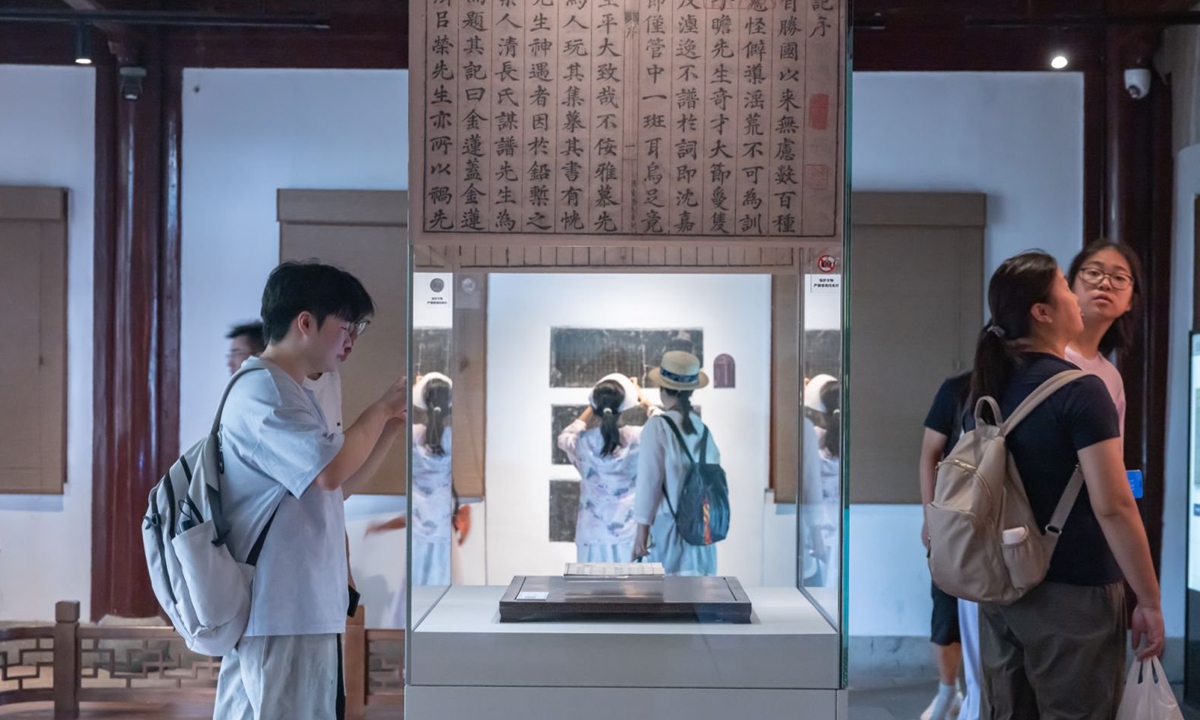
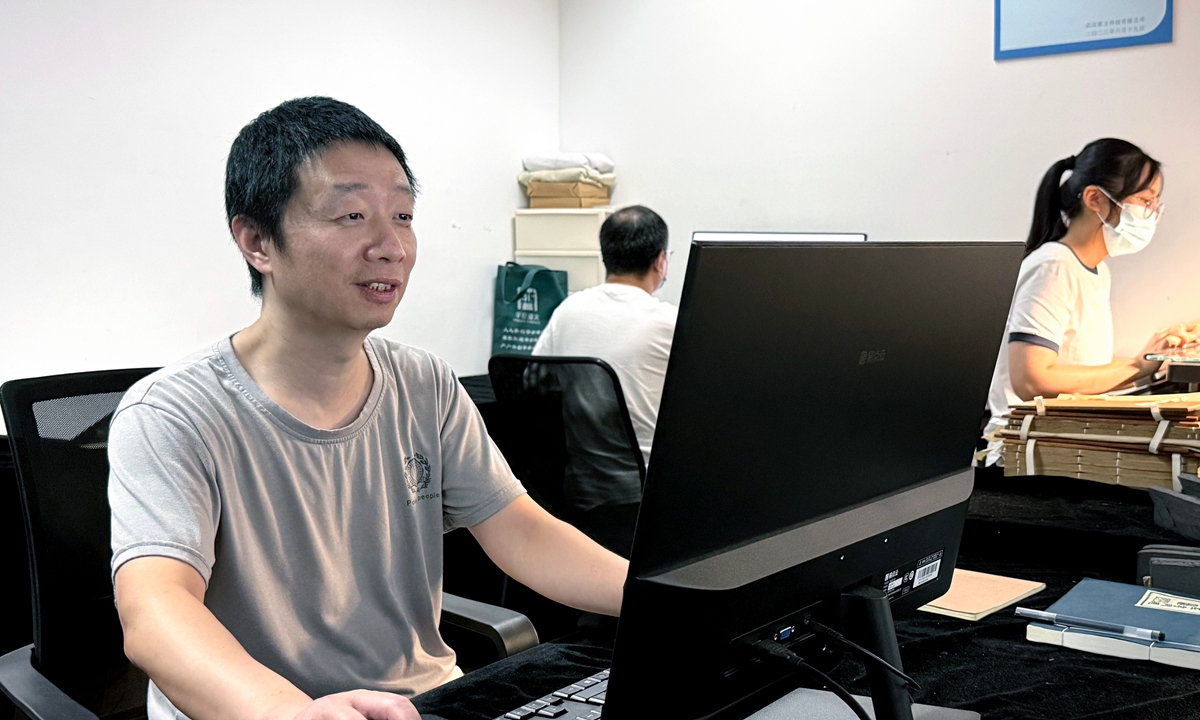
Huang Gang is in his fifties. Every day, he sits before a computer screen at Tianyige Museum (Tianyige), flipping through ancient books - digitally.
As director of the information technology department at Tianyige Museum in Ningbo, East China's Zhejiang Province, home to Asia's oldest surviving private library and one of the world's three oldest remaining family-run libraries, his job title may seem far removed from old books. Yet his work centers on them: converting brittle, thread-bound antique volumes into searchable, zoomable digital files accessible on screen.
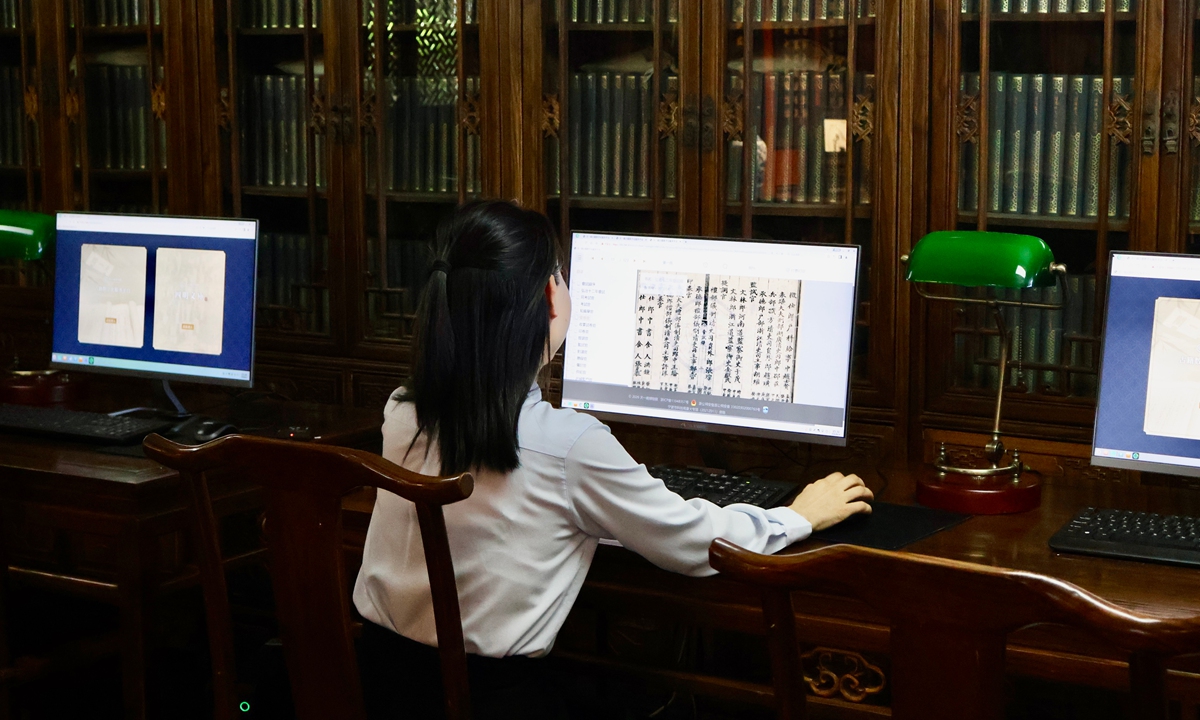
For years, Tianyige has carried out digitization in batches guided by its mission: rescue-oriented preservation, scholarly organization and public-oriented outreach. Its teams have scanned more than 3.4 million pages of ancient texts. The institution rolled out its Ancient‑Book Digital Service Platform back in 2009. By 2025, the platform had drawn over 4.6 million total visits.
To outsiders, this might look like a headlong rush into digitization. For Huang and his colleagues, it is delicate work balanced between fast‑evolving artificial intelligence models and the reverence owed to fragile paper relics. "Technology is a tool, ancient books are artifacts, and reading is the ultimate purpose," Huang told the Global Times.
Beyond tech boundaries
Deep in the storage vaults of Tianyige, tens of thousands of ancient volumes rest in silence. Some pages are curled and fragile; others bear faded script -the accumulated marks of centuries. Vulnerable to aging, wear and external damage, these precious paper relics can hardly sustain long-term repeated manual consultation, making digital preservation an indispensable way to inherit ancient book resources.
Huang's daily work involves leading his team in the digitization of the library's entire collection of ancient books, paintings and cultural relics, bringing rare treasures out of the shadows and into public view.
AI now serves as a core auxiliary tool for ancient-book digitization and research. Huang's group initially built character-recognition frameworks based on optical-character-recognition technology. By cross-checking outputs across different models, ancient Chinese characters, damaged script and blurry handwriting.
According to Zhejiang Daily, by August 2025, the Tianyige's digital platform had added over 3,700 new digitized book sets, lifting its total digital holdings past 20,000 volumes.
Digitization is never a purely technical exercise; in-depth scholarly expertise in ancient texts remains indispensable. Huang frequently collaborates with Zhao Xuteng, a museum librarian specializing in classical literature. Zhao is responsible for selecting which volumes to digitize, evaluating editions, studying content, and identifying works of significant academic or public value. While one team focuses on the technical execution, another digs deep into the textual substance, ensuring that cold digital capture remains faithful to the historical and bibliographic logic of the originals.
Staying true to reading
When he is not writing code, Huang keeps asking one fundamental question: What should technology actually do for people? "All technology ultimately serves the act of reading itself," he said. "It can never replace that."
With the rapid rise of large language models, demand for high-quality text corpora has surged. Overseas, some AI companies have reportedly purchased millions of printed books in bulk, scanned them and then shredded the originals.
"Machines can efficiently compile documents, retrieve sources and generate explanatory notes. Real engagement with ancient texts, however, is far more than mechanical assembly of characters," Huang noted.
Both Huang and Zhao stressed that human beings sit at the heart of cultural inheritance. People absorb wisdom from old texts, draw on personal experience and scholarship to reflect, and produce new knowledge - an intellectual process no AI can fully replicate.
The Global Times learned that every digitization workflow at Tianyige follows strict closed-loop protocols: collection checkout logging, noncontact scanning, AI-powered quality checks, precise image stitching and compliant online publication. The full procedure minimizes physical wear on original artifacts.
"A book is, first and foremost, a cultural relic that carries a thousand-year legacy," Huang said. "Only secondarily is it a text to be read." That principle, he added, is shared by all guardians at Tianyige.
"Media change, technologies evolve, but the essence of reading has never changed," he stressed.
Today, drawing on its comprehensive digital collections, Tianyige hosts monthly exhibitions of rare texts and organizes family reading events where parents and children explore the classics together. For Huang and his colleagues, the most gratifying reward is watching more and more ordinary people develop a love for ancient reading and a deeper appreciation for the traditional Chinese culture.
In an era swept by artificial intelligence, Tianyige's guardians tend to fragile paper relics while leveraging modern technology, preserving the genuine power of reading. More than 450 years of scholarly heritage flows onward, passing between human fingertips and glowing digital screens.
。
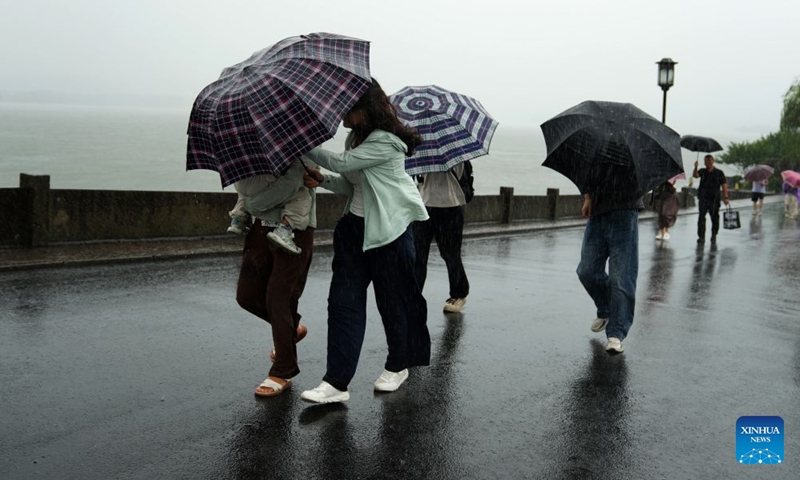
China issued seven weather and disaster alerts at 6:00 pm on Sunday after Typhoon Dolphin made landfall in Taizhou, East China's Zhejiang Province, including a red typhoon warning, an orange rainstorm warning and a red flash flood warning.
Typhoon Dolphin, the 13th of the year, landed in Taizhou, East China's Zhejiang Province at 5:30 pm on Sunday as a severe typhoon, packing maximum winds of 42 meters per second near its center and a minimum central pressure of 945 hectopascals, according to National Meteorological Center (NMC).
After making landfall, Dolphin continued moving westward. The storm is forecast to gradually weaken as it shifts northwestward at a speed of 15-20 kilometers per hour.
The NMC warned that from Sunday evening to Monday evening, heavy to torrential rains are expected in multiple parts of provinces and regions including Zhejiang, Shanghai, and Anhui in Eastern China, and Henan, Hubei in Central China, and some other regions in southern China. Some areas in eastern and central Zhejiang, southern Anhui and other regions could see extreme rainfall of up to 250-420 millimeters.
Authorities also warned of secondary risks, including flash floods, flooding of small and medium-sized rivers, urban waterlogging, severe convective weather and geological disasters. The Ministry of Water Resources and the China Meteorological Administration jointly issued a red flash flood warning, saying parts of eastern and southern Zhejiang face a high risk of flash floods.
The Ministry of Natural Resources and the China Meteorological Administration issued an orange geological disaster risk alert, urging local governments to strengthen monitoring and emergency response, while advising residents in high-risk areas to evacuate according to local arrangements.
The typhoon also brought strong winds, with areas near its path expected to experience winds of up to force 13-14 and gusts reaching force 15-16.
According to statistics, August sees the highest number of typhoons generated and making landfall in China each year. The NMC forecast that in the next 10 days, one to two typhoons may form over the northwestern Pacific or the South China Sea, with a relatively low likelihood of affecting China's coastal areas, per CCTV News.
Global Times
。
Current article:http://hwg.xuanliaruamibinmilangca.shop/list_joppe/0v3s.html
Published on:02:12:24