大秦帝国之纵横
China-Laos Railway trade value tops $2.97 billion in 7 months as cargo categories expand to 3,900_我的网站

A |
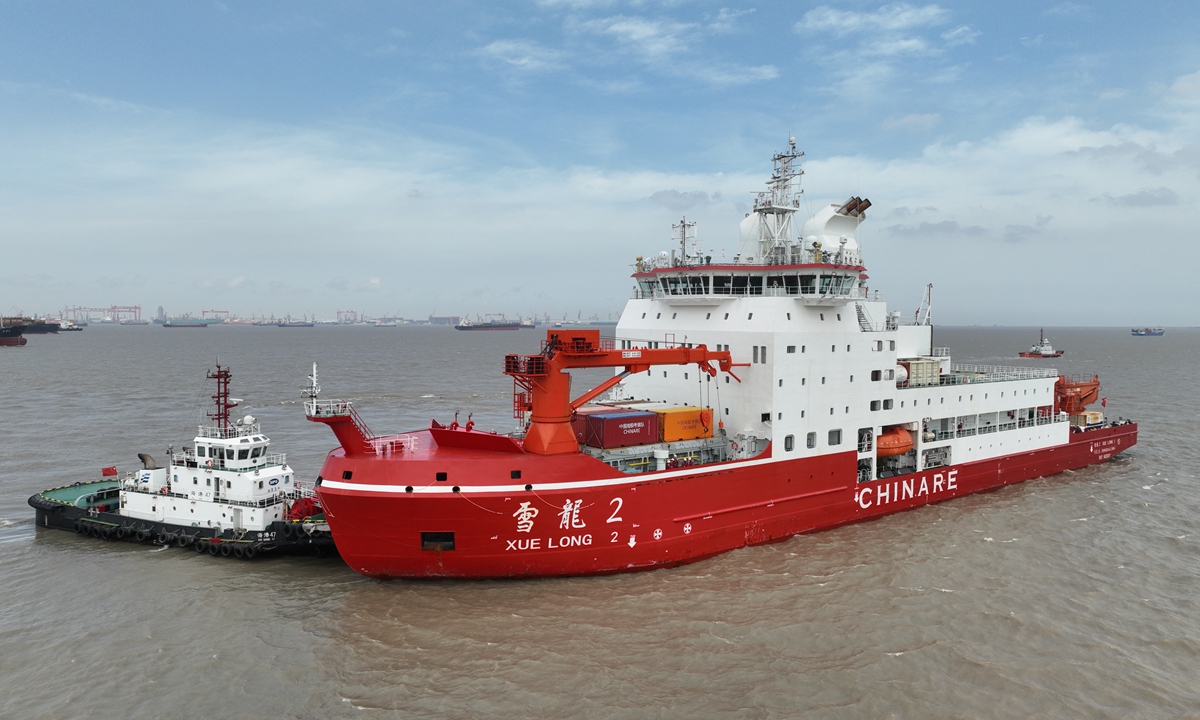
Chinese research icebreaker Xuelong 2 arrives at the domestic base dock of China's polar expeditions in Waigaoqiao, Shanghai, on May 18, 2026. The vessel successfully completed all tasks of China's 42nd Antarctic expedition mission before returning to Shanghai. Photo: VCGChina's research icebreaker Xuelong 2 began its first ice station survey of its current voyage near 84 degrees north latitude in the central Arctic Ocean on Sunday, marking the start of an approximately half-month comprehensive survey of the region.
After completing the first stage of comprehensive ocean station surveys on Friday, Xuelong 2 sailed toward higher latitudes and selected a large, relatively flat piece of sea ice about 1.5 meters thick in a densely packed ice zone for its first ice station.
According to Lin Long, captain of the Xuelong 2 sea ice team, the ice station survey conducted by the vessel during this voyage will include six short-term ice stations and one long-term ice station, the Xinhua News Agency reported Sunday.
More than 20 types of scientific operations will be carried out, including the deployment of expendable ice-based buoys, snow and ice-core sampling, under-ice water sampling, sea-ice remote sensing, atmospheric profiling and under-ice oceanographic observations.
Lan Musheng, assistant to the chief scientist of the expedition, said the researchers will comprehensively monitor changes in parameters related to the atmosphere, sea ice, upper ocean and ecological processes beneath the ice as the sea ice melts.
The observations will provide scientific data for studying the rapid changes in Arctic sea ice, the mechanisms behind those changes and the evolution of Arctic ecosystems.
The ice station work is part of China's 16th Arctic Ocean scientific expedition, which was organized by the Ministry of Natural Resources. The expedition set sail from Dalian, Northeast China's Liaoning Province on July 3.
The mission is being carried out by four vessels - Xuelong, Xuelong 2, Jidi and Tansuo-3 - and is expected to be completed in early October.
The expedition is focusing on comprehensive surveys of sea ice, hydrology, biology, ecology and the atmospheric environment in key areas of the Arctic Ocean.
The two icebreakers Xuelong and Xuelong 2 will work together on the ice station surveys. Xuelong completed surveys at 12 ice stations on Friday.
Lin said the ice station locations planned for Xuelong 2 will work in coordination with those of Xuelong to form an observation array.
The arrangement will allow researchers to more deeply investigate the interactions among the atmosphere, sea ice and ocean in the central Arctic Ocean amid rapid environmental changes, as well as their coupling effects with the ecosystem.
The expedition is being conducted against a backdrop of rapid changes in the Arctic environment.
When the mission was launched in July, expedition leader Wang Jinhui said that global warming was driving rapid and profound changes in the Arctic natural environment, with trends such as sea-ice melting intensifying.
The expedition is therefore designed not only to monitor environmental changes but also to investigate frontier scientific questions, including the dynamic evolution of the oceanic crust.
Working on sea ice also presents significant safety challenges. Low temperatures and complex ice-surface conditions can pose risks to researchers, while polar bears are considered the biggest safety risk during ice station operations.
The expedition team has therefore formulated specific bear-prevention and emergency response plans and equipped personnel with various types of bear-deterrence equipment and emergency supplies to ensure their safety.
。

B |
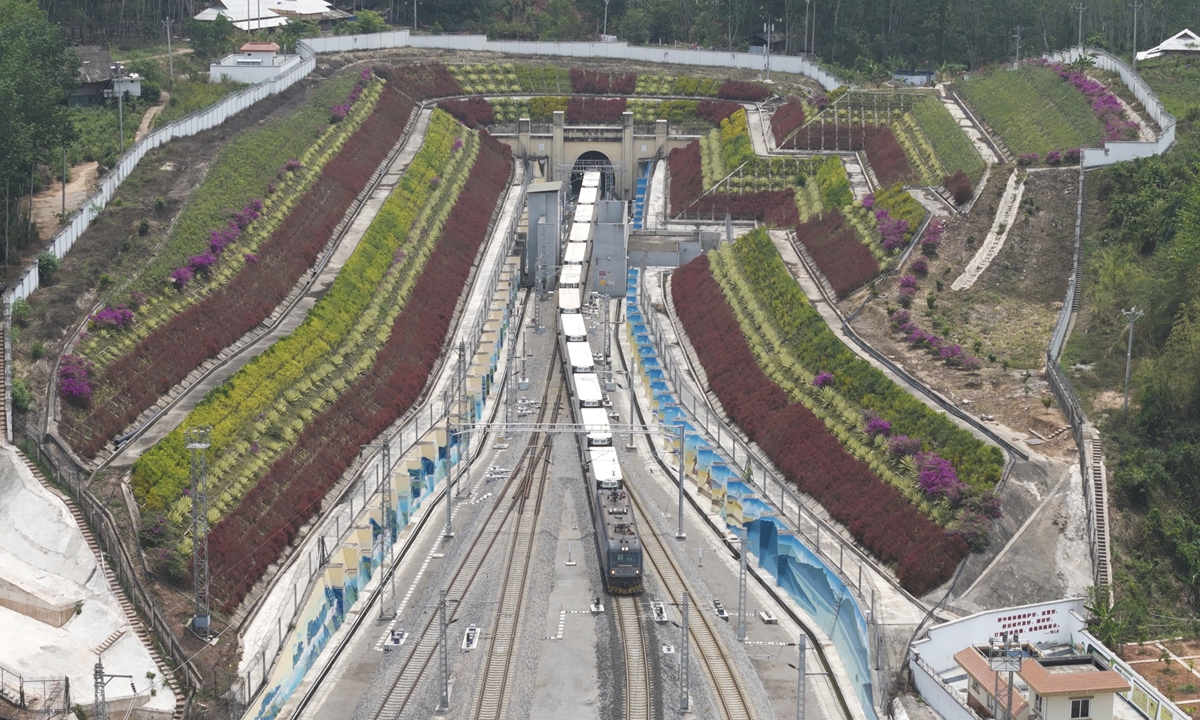
A cargo train runs along the China-Laos Railway. File photo: Courtesy of China Railway Kunming Group
Trade via the China-Laos Railway surpassed 20 billion yuan ($2.96 billion) in the first seven months of the year, up 29.9 percent year-on-year, customs data showed. The infrastructure project is further expanding its spillover effects on trade and cooperation among ASEAN members.
As the railway continues to serve as a new engine for regional economic connectivity, the cross-border infrastructure project is expanding its cargo portfolio and injecting fresh momentum into trade and development across ASEAN economies, Chinese analysts said.
Since its launch in 2021, the railway has handled more than 94 billion yuan worth of cross-border cargo, with the range of transported goods expanding from more than 10 categories at the initial stage of operation to more than 3,900, including new-energy vehicles (NEVs), tropical fruits, temperate vegetables and traditional Chinese medicine.
The line connects 19 countries and regions and provides sustained momentum for regional trade cooperation, the data showed.
To date, the China-Laos Railway has served more than 7,000 foreign trade operators in China.
In recent months, as ASEAN members enter the peak season for fruit exports via the China-Laos Railway, agricultural products from countries along the route are gaining wider access to the Chinese market, while advanced Chinese industrial products are emerging as new drivers of cross-border trade growth, with the cargo mix continuously evolving to better meet market demand.
In the first half of 2026, imports of tropical fruits via the China-Laos Railway totaled 4.22 billion yuan, up 25.8 percent year-on-year, according to customs data cited by the Xinhua News Agency on July 22.
Foreign trade of NEVs, lithium batteries and photovoltaic products via the railway totaled 2.14 billion yuan in the first half of 2026, up 348.5 percent year-on-year, emerging as a new highlight of cross-border trade growth, the report showed.
The continued expansion of cargo categories reflects the transformation of the corridor from a single-purpose cross-border transport route into a key link connecting regional industrial chains.
The differentiated two-way trade structure reflects the complementary strengths of economies along the route, matching their resource advantages and industrial needs, Bian Yongzu, executive deputy editor-in-chief of Modernization of Management magazine, told the Global Times.
"Combined with multimodal transport services and streamlined customs measures, the China-Laos Railway has evolved beyond a cross-border transport route into a practical platform for resource complementarity, industrial coordination, and greater connectivity among Lancang-Mekong countries," Bian added.
Global Times
。
Current article:http://hwg.xuanliaruamibinmilangca.shop/7jq/mhh2n2.html
Published on:00:49:14

 数名中国公民因未按要求申报携带的大额现金,被沙特有关部门拘押,中使馆发布重要提醒
 Wi-Fi联盟将在第三季度启动Wi-Fi 6设备认证计划
 嫦娥四号放多少钱?大概和建造一条1公里长的地铁差不多。
 数据:苹果的iphone xr销量已经超过iphone xs。
 诺里斯带领赖斯参观迈凯伦基地,聊赛车发展历史、比赛后恢复心得
 Political preferences clash with warship building realities as Trump pushes costly Ford class carrier revamp: experts
查看所有0条评论>>